.svg)

Product support vs. customer support may seem to have a lot of overlap. However, they are different. Product support is focused on resolving product-specific issues. Customer support is responsible for resolving customer needs across the lifecycle.
Product Support Defined
Product support is defined as assistance provided by a company to its customers so they can use a product or service they’ve purchased. The support can include activating or onboarding, troubleshooting, issue resolution or supporting updates. Product teams must have strong technical knowledge to work through problems or questions, and they are the main source of accurate information.
Customer Support Defined
Customer support is broader and is defined as managing and servicing the full customer relationship. If product support is getting and keeping a product up and running, customer support is everything else that ensures customer needs are met and issues resolved, across the full lifecycle. Even when it crosses into other products. Product support is highly specific and constrained. Customer support is all encompassing.
In banking, both of these support models are complex, and so they can fail. The reason? Execution and service delivery are not handled by just one team. The workflows involve multiple departments, vendors, and different systems and applications.
Product Support vs. Customer Support
.png)
Product Support vs. Customer Service Goals
There is also a difference between the goals of product support teams vs. customer support teams.
The primary goal of product support agents is to resolve technical issues as quickly, efficiently and cost-effectively as possible during initial contact if possible. The secondary goal is to resolve the issue as swiftly as possible. Because trained technical support is more expensive and focuses on expediency, product support resolution efforts are usually less personalized.
In contrast, customer support agents focus on overall customer experience (CX) and satisfaction. Their ultimate focus is to ensure the customer is satisfied with how the banking product is meeting their needs. That goal translates into greater retention, lower churn and higher satisfaction scores.
Why Both Types of Support Break in Banking Operations
In theory, product support and customer support serve different roles, but in reality, in banking, there is a lot of cross over between the two. The difference between product support and customer support is not the problem. The problem i that both types of support tend to operate in isolation from one another even though they are multi-party workflows that must span different teams, systems and partners. Neither solve the uncoordinated workflows, lack of ownership and unclear sequencing that frustrate customers when they try to obtain support for their banking product or customer experience.
Top Questions Resulting from Fragmented Support Operations
Product and customer support workflows are both so fragmented that failure points are almost inevitable. Stalls typically occur between steps, systems and people in the gaps where customer status is not clear and no one is sure who is responsible in that gap. The operational questions required to execute these support journeys across banking ecosystems include:
(e.g., KYC review, account setup, vendor provisioning, or activation)
(internal operations, product support, relationship manager, or third-party vendor)
(missing documentation, failed integration, approval delays, or vendor dependency)
(prior tickets, onboarding steps completed, communications, or escalations)
(CRM, ticketing system, core platform, external partner system)
(instead of piecing together updates via email and spreadsheets across disconnected tools and teams)
The Cost of Fragmented Support Workflows
In both product and customer support, uncoordinated journey flows and the questions above have a real-world impact on a bank's service delivery and performance in five areas:
• Longer onboarding timelines
• Slower time to first transaction
• Higher cost-to-serve
• Rework, duplication and operational inefficiency
• Customer frustration and churn
• Higher headcount
• Difficulty automating and scaling operations
These negative metrics point to a structural problem inside banks, not a lack of tools or investment.
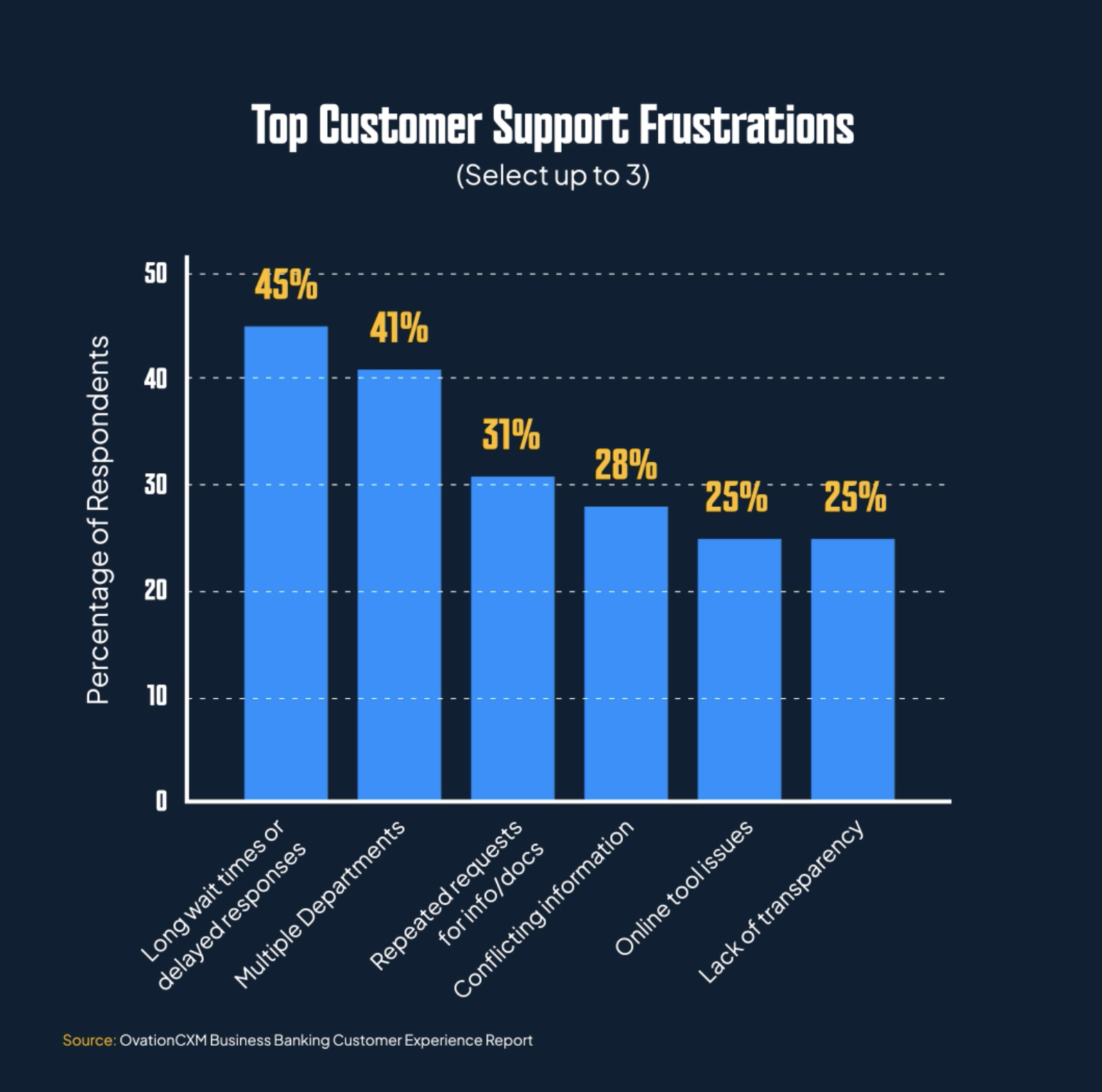
These outcomes are not driven by a lack of support capability or investment. Banks have modernized both customer support and product support functions and continue to add tools, including AI agents and automation.
The issue is structural. Both support models depend on workflows that span multiple systems, teams, and external partners. Each step relies on inputs from others, yet no single system is responsible for coordinating execution across them. As a result, even when teams have the expertise and put in significant effort, it is difficult to execute consistently or at scale.
The Orchestration Gap
The orchestration gap is the root cause of why both product support and customer support fail to execute reliably in banking environments. These models are designed to operate within functions, but support delivery in banking happens across them.
In practice, support is not a single interaction—it is a sequence of interdependent steps that must move between teams, systems, and partners. Without coordination at that level, delays, rework, and customer frustration are inevitable.
Why Existing Approaches Don’t Close the Gap
Banks often respond to support challenges by adding more headcount, processes, or systems. However, these approaches do not address the underlying issue: distributed work that is not coordinated in a single layer.
As more tools and AI use cases are introduced, the delivery environment becomes more complex, not less. Teams still rely on manual effort to track status, resolve dependencies, and move work forward across disconnected systems and external partners.
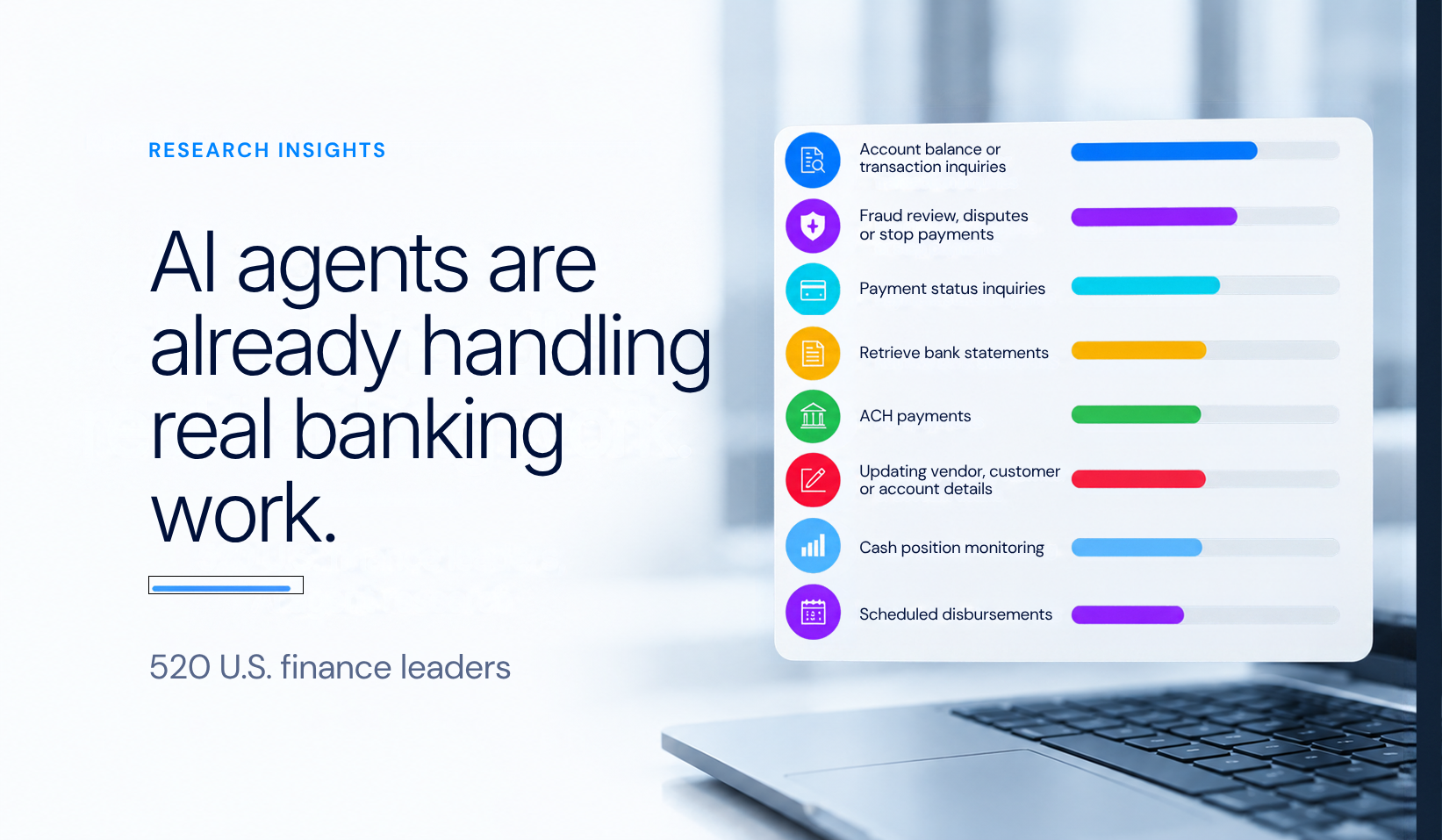
This is one of the reasons many AI initiatives fail to scale beyond initial pilots. Without coordination across workflows, fragmentation persists—limiting efficiency, slowing execution, and constraining innovation.
Where Product Support Still Adds Value
While orchestration addresses how work is coordinated across support workflows, it does not replace the need for technical expertise. In banking environments that rely on complex products such as payment systems and POS platforms, knowledgeable product support remains critical to resolving issues accurately and efficiently.
Even highly killed product support teams operate within the same fragmented workflows. Without coordination across systems, teams, and partners, their ability to deliver timely outcomes is limited by the same structural constraints.
Product Support Simplified
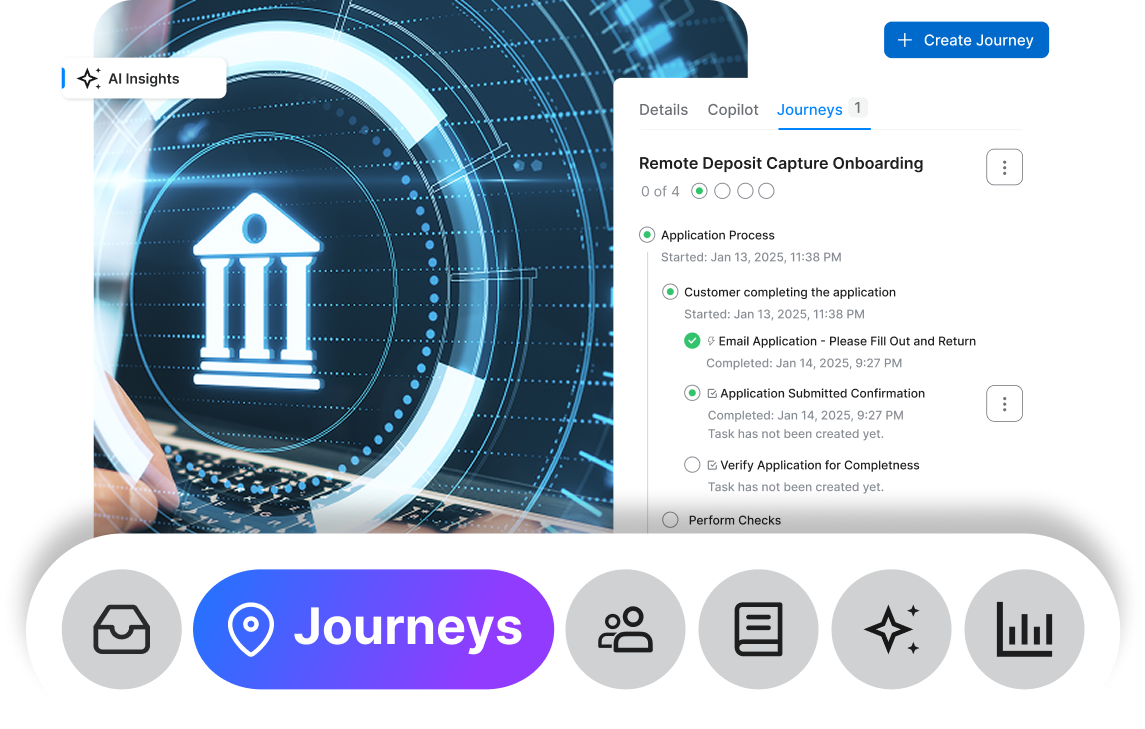
OvationCXM provides an orchestration platform designed to coordinate the workflows surrounding technical product support, along with a complementary network of remote and field activation technicians for institutions that need help to expand their support capabilities.
This combination allows banks to not only access specialized support expertise, but they can also manage how that work is executed across teams, systems, and partners. By bringing both coordination and capability into a single layer, banks gain a centralized view of support activity, improve execution, and reduce the manual effort required to move work forward.